Skip to content
NidoMed
  • Knowledge Base
  • Home
  • About Us
  • Pricing
  • Services
  • Training
  • Contact
PLBook appointment
Search
  • Knowledge Base
  • Home
  • About Us
  • Pricing
  • Services
  • Training
  • Contact
PL
Book appointment
NidoMed

Nido Family Center – comprehensive medical care for children and adults in Kraków.

+48 577 550 025[email protected]

ul. Władysława Żeleńskiego 86, 31-353 Kraków

Pon-Pt: 8:00 - 19:00

Services

  • Osteopathy
  • Physiotherapy
  • Feeding therapy
  • Orthopaedics
  • Ultrasound
  • All services

About

  • About us
  • Specialists
  • Content verification
  • Quality policy
  • Pricing
  • Training (FizjoMed Academy)

Knowledge Base

  • Articles
  • Feeding diary

Legal

  • Privacy policy
  • Regulations
  • Accessibility

© 2026 NidoMed. All rights reserved.

Nido Family Center in Kraków

  1. Home
  2. /
  3. Services
  4. /
  5. Osteopathy

Osteopathy

Holistic manual therapy restoring body balance. Combines diagnosis and treatment of the musculoskeletal, visceral, and craniosacral systems.

Book appointment+48 577 550 025
💰

Price

250 zł – 400 zł

⏱

Duration

30-45 min

🩹

Performed by

Pięta, Proficz +

👥

Who for

Children & adults

📋

Referral

Not required

  • About
  • Visit
  • Pricing
  • Who for
  • Indications
  • Contraindications
  • Goals
  • Expectations
  • Alternatives
  • Specialists
  • FAQ
  • References
  • Contact
  • ADOS-2 — Autism Diagnostic Assessment→
  • Feeding Therapy→
  • Frenotomy (Tongue-Tie Release)→
  • Orthopaedics→
  • Osteopathy
  • Physiotherapy→
  • Sensory Integration Therapy→
  • Ultrasound (USG)→
Osteopathy

What is osteopathy

Osteopathy is a holistic method of manual diagnosis and treatment that views the body as an interconnected whole. The therapist assesses not only where you feel pain but looks for its true cause — often located in a completely different part of the body.

In osteopathy, we work on three planes: the musculoskeletal system (joints, muscles, fascia), the visceral system (internal organs and their mobility), and the craniosacral system (meningeal tensions, craniosacral rhythm). Proper balance between these systems allows the body to self-regulate and heal.

Osteopathy is recognised as a full medical discipline in many European countries and in the United States. In Poland, work is underway to formally regulate the osteopathic profession. Our specialists have completed extensive postgraduate training (a minimum of 5 years) and hold international certifications.

When to consider osteopathy

Osteopathy is effective both for treating pain and as a preventive approach to maintaining body balance. Consider visiting an osteopath when:

  • you have chronic back, neck, or head pain that has not responded to previous treatment,
  • you experience recurring digestive complaints (reflux, constipation, bloating) without a clear organic cause,
  • you notice restricted joint mobility after an injury or surgery,
  • you are pregnant and looking for a safe way to relieve spinal pain, pelvic pain, or tension,
  • your child (newborn or infant) has positional asymmetry, colic, feeding difficulties, or reluctance to lie on their tummy,
  • you want to support other therapies — orthodontic, speech, or rehabilitative — with a holistic approach.

What to expect

Osteopathy is a manual therapy — we do not use medication or devices. Techniques are usually gentle, often relaxing, and tailored to the individual problem and the patient's sensitivity. In many cases, improvement is noticeable after the very first session. A complete course of treatment typically takes a few sessions, though the exact plan is established after the initial assessment.
Book appointment

Content verified by: dr n. med. Filip Pięta · 23 December 2025

What to expect during the visit

1

History

The osteopath asks about the reason for your visit, the history of your symptoms, previous injuries, illnesses, surgeries, and ongoing treatment. For children, the history includes the course of pregnancy and birth. This is the foundation for further diagnosis — the more information, the more targeted the therapy.

2

Manual assessment

The therapist evaluates posture, joint mobility, tissue tension, and the body's responses through osteopathic tests and palpation. This is a hands-on examination — no equipment is used. It can identify dysfunctions that are not visible on X-ray or MRI images.

3

Treatment

Based on the history and assessment, the osteopath selects appropriate techniques: joint mobilisations and manipulations, craniosacral techniques, visceral techniques (internal organs), myofascial, or functional approaches. The choice depends on the problem — techniques are usually gentle and painless.

4

Recommendations

The visit concludes with a discussion of the plan ahead: what to pay attention to in the coming days, which exercises or habits to adopt, and when to schedule a follow-up. The osteopath also explains what post-treatment reactions are normal.

Pricing

ServicePrice
Wizyta u osteopaty250 - 400 zł

Full pricing available on our pricing page.

Who is this service for

Newborns and infants

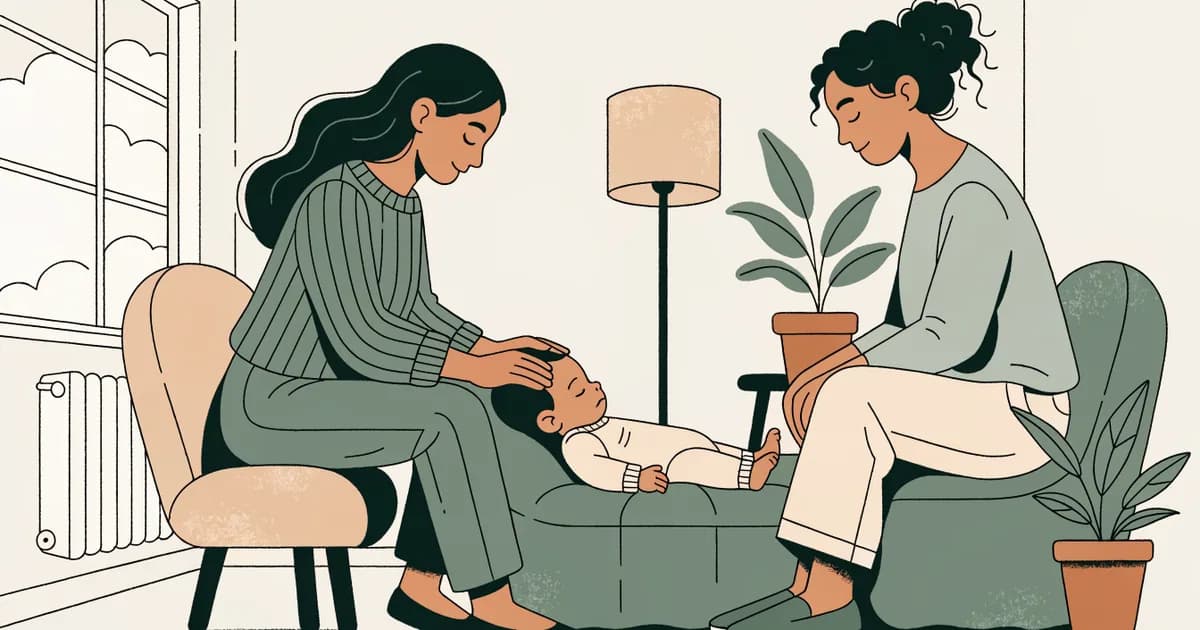
Positional asymmetry, colic, sucking difficulties, post-birth tension disorders. Neonatal osteopathy is safe from the very first days of life.

Preschool and school-age children

Postural problems, recurrent upper respiratory infections, digestive issues, bruxism.

Pregnant women

Spinal and pelvic pain, heartburn, swelling. Osteopathy is safe throughout all trimesters and supports birth preparation.

Postnatal women

Restoring proper pelvic function, diastasis recti, lumbar pain, tension after caesarean section.

Couples trying to conceive

Complementary support for fertility treatment — working with pelvic tension, improving tissue mobility, reducing stress. Always in coordination with the attending physician.

Adults with chronic pain

Back pain, migraines, tension headaches, sciatica, shoulder pain. Addressing the cause, not just the symptom.

Athletes and active individuals

Injuries, overuse, restricted range of motion. Optimising musculoskeletal function and faster return to activity.

Older adults

Restricted mobility, joint pain, balance issues. Gentle techniques adapted to the individual's health status.

Indications

  • Spinal pain (cervical, thoracic, lumbar)
  • Sciatica and brachial neuralgia
  • Head pain and tension, including migraines
  • Muscle tension and trigger points
  • Restricted joint mobility after injury or surgery
  • Gastrointestinal disorders (reflux, constipation, bloating)
  • Colic and digestive issues in infants
  • Positional asymmetry and preferential head position in newborns
  • Sucking and feeding difficulties in infants
  • Pelvic and spinal pain during pregnancy
  • Postnatal complaints (sacral pain, pelvic floor tension)
  • Recurrent upper respiratory tract infections in children
  • Bruxism and temporomandibular joint dysfunction
  • Tinnitus and dizziness of myofascial origin
  • Post-orthodontic and post-dental treatment conditions
  • Complementary support for infertility treatment (in coordination with the attending physician)
  • Support for post-injury and post-surgical rehabilitation

Contraindications and limitations

  • Fractures and unstable bone injuries (until stabilised)
  • Active joint inflammation in the acute phase (e.g. septic arthritis)
  • Advanced osteoporosis — manipulative techniques require modification
  • Malignant tumours in the spine or soft tissues
  • Bleeding disorders (consultation with attending physician required)

When to seek urgent medical help

  • Sudden severe headache with vomiting, neck stiffness, and photophobia — may indicate meningitis
  • Sudden limb weakness, difficulty speaking, facial drooping — signs of stroke, call 112
  • Chest pain radiating to the arm, shortness of breath, cold sweats — suspected heart attack
  • Injury with suspected fracture (deformity, instability, swelling) — go to the emergency department for X-ray first

Therapy goals

  • Address the cause of pain, not just alleviate symptoms
  • Restore proper joint and soft tissue mobility
  • Reduce muscular and fascial tension
  • Improve internal organ function (digestion, breathing)
  • Restore balance between structure and function in the body
  • Support the body's natural self-regulation mechanisms
  • Reduce the frequency of symptom recurrence
  • Improve comfort during pregnancy and prepare the body for birth
  • Normalise tone and symmetry in infants

Who performs this service

Filip Pięta — osteopata

Filip Pięta

Osteopatia

Krakowski osteopata Katarzyna Proficz

Katarzyna Proficz

Fizjoterapia

Osteopata z krakowa Marek Mrowiec

Marek Mrowiec

Osteopatia

Realistic expectations

  • After the first visit, many patients notice improvement — reduced pain, better mobility, relaxation.
  • Within 1-2 days after treatment, you may feel mild tenderness in the treated areas — this is a normal response.
  • Lasting results typically require 2-5 sessions, spaced 1-3 weeks apart.
  • For long-standing or multifactorial problems, collaboration with a physiotherapist, orthopaedic surgeon, or speech-language pathologist may be needed.
  • Effectiveness also depends on whether the patient follows recommendations (exercises, habit changes, work posture).

When to consider a different consultation

  • If you suspect a fracture or joint instability — start with an orthopaedic consultation and imaging.
  • If your symptoms have a clear neurological basis (numbness, muscle weakness, bladder problems) — start with a neurologist.
  • If the problem concerns speech, swallowing, or feeding — consider a speech-language pathology consultation (at NidoMed we combine these specialisations).
  • If you need ultrasound diagnostics (e.g. infant hips, soft tissue) — book an ultrasound scan, and the osteopath can work with the results.

Physiotherapy

Complementary work on strength, stability, and movement habits

Feeding Therapy

Infant osteopathy often supports feeding therapy

Orthopaedics

Imaging diagnostics and consultation for complex joint problems

Ultrasound (USG)

Soft tissue imaging supporting osteopathic assessment

Frenotomy (Tongue-Tie Release)

Osteopathy often accompanies the procedure as preparation and post-operative support

Want to book an appointment?

Book appointmentCall us

Frequently asked questions

Does osteopathy hurt?
Osteopathic techniques are selected individually and in most cases are gentle, even relaxing. During certain techniques you may feel brief discomfort that passes quickly. The osteopath continuously checks how you are feeling and adjusts the intensity.
How many sessions will I need?
It depends on the problem. Many pain conditions resolve within 2-4 sessions. Chronic, long-standing problems may require more work. The osteopath establishes a treatment plan after the first visit — always with the aim of achieving results as quickly as possible.
Is osteopathy safe for infants?
Yes. Neonatal and infant osteopathy uses exceptionally gentle techniques — pressure comparable to pressing on closed eyelids. It is safe from the very first days of life and often supports feeding, digestion, and positional symmetry.
Is osteopathy safe during pregnancy?
Yes, throughout all trimesters. The osteopath uses positions and techniques adapted to pregnancy. Treatment relieves spinal and pelvic pain, helps with heartburn, and prepares the body for birth. Contraindications apply to high-risk pregnancies — in such cases, the decision requires consultation with a gynaecologist.
How does osteopathy differ from physiotherapy?
Physiotherapy focuses on the musculoskeletal system — muscles, joints, and post-injury rehabilitation. Osteopathy also encompasses the visceral (internal organs) and craniosacral systems, looking for the root cause of problems in the connections between systems. At NidoMed, both disciplines work together and complement each other.
Do I need a referral?
No. A referral is not required for an osteopathy appointment. You can book directly.
What should I bring to the first visit?
Comfortable clothing (e.g. T-shirt and leggings), any imaging results (X-ray, MRI, ultrasound) if available. For a child, bring the health booklet and results from previous consultations. We recommend silencing your phone.

References

  1. Franke H, Franke JD, Fryer G. "Osteopathic manipulative treatment for nonspecific low back pain: a systematic review and meta-analysis." BMC Musculoskelet Disord. 2014;15:286. PMID: 25175885 [link]
  2. Dal Farra F, et al. "Effectiveness of osteopathic interventions in chronic non-specific low back pain: a systematic review and meta-analysis." Complement Ther Med. 2021;56:102616. PMID: 33197571 [link]
  3. Cerritelli F, et al. "Effect of osteopathic manipulative treatment on length of stay in a population of preterm infants: a randomized controlled trial." BMC Pediatr. 2013;13:65. PMID: 23622070 [link]
  4. Bagagiolo D, et al. "Efficacy and safety of osteopathic manipulative treatment: an overview of systematic reviews." BMJ Open. 2022;12(4):e053468. PMID: 35414546 [link]
  5. World Health Organization. "Benchmarks for training in osteopathy." WHO, 2010. [link]

Have questions? We’re happy to help!

Required fields are marked *

Include if you prefer to be contacted by phone