Skip to content
NidoMed
  • Knowledge Base
  • Home
  • About Us
  • Pricing
  • Services
  • Training
  • Contact
PLBook appointment
Search
  • Knowledge Base
  • Home
  • About Us
  • Pricing
  • Services
  • Training
  • Contact
PL
Book appointment
NidoMed

Nido Family Center – comprehensive medical care for children and adults in Kraków.

+48 577 550 025[email protected]

ul. Władysława Żeleńskiego 86, 31-353 Kraków

Pon-Pt: 8:00 - 19:00

Services

  • Osteopathy
  • Physiotherapy
  • Feeding therapy
  • Orthopaedics
  • Ultrasound
  • All services

About

  • About us
  • Specialists
  • Content verification
  • Quality policy
  • Pricing
  • Training (FizjoMed Academy)

Knowledge Base

  • Articles
  • Feeding diary

Legal

  • Privacy policy
  • Regulations
  • Accessibility

© 2026 NidoMed. All rights reserved.

Nido Family Center in Kraków

  1. Home
  2. /
  3. Services
  4. /
  5. Orthopaedics

Orthopaedics

Orthopaedic consultations for children and adults. Diagnosis of postural defects, foot conditions, spinal and joint problems. Infant hip ultrasound screening.

Book appointment+48 577 550 025
💰

Price

130 zł – 900 zł

⏱

Duration

30-40 min

👥

Who for

Children & adults

📋

Referral

Not required

  • About
  • Visit
  • Pricing
  • Who for
  • Indications
  • Contraindications
  • Goals
  • Expectations
  • Alternatives
  • FAQ
  • References
  • Contact
  • ADOS-2 — Autism Diagnostic Assessment→
  • Feeding Therapy→
  • Frenotomy (Tongue-Tie Release)→
  • Orthopaedics
  • Osteopathy→
  • Physiotherapy→
  • Sensory Integration Therapy→
  • Ultrasound (USG)→
Orthopaedics

What is an orthopaedic consultation

An orthopaedic consultation is a visit with a specialist doctor who deals with the diagnosis, treatment, and prevention of musculoskeletal conditions — bones, joints, ligaments, tendons, and muscles. At NidoMed, orthopaedic consultations cover both children (from infancy) and adults.

The orthopaedic surgeon at NidoMed works directly with physiotherapists and osteopaths within the clinic. This means that after receiving a diagnosis, you can begin rehabilitation immediately — without searching for specialists elsewhere. If needed, diagnostics can be extended with an ultrasound scan performed directly in the consulting room.

When to see an orthopaedic specialist

  • You have joint, spinal, or muscle pain that has not resolved after several days.
  • You have suffered an injury (sprain, bruise, suspected fracture) and need an assessment.
  • You notice postural asymmetry in your child, uneven hip alignment, toe-walking, or an abnormal gait.
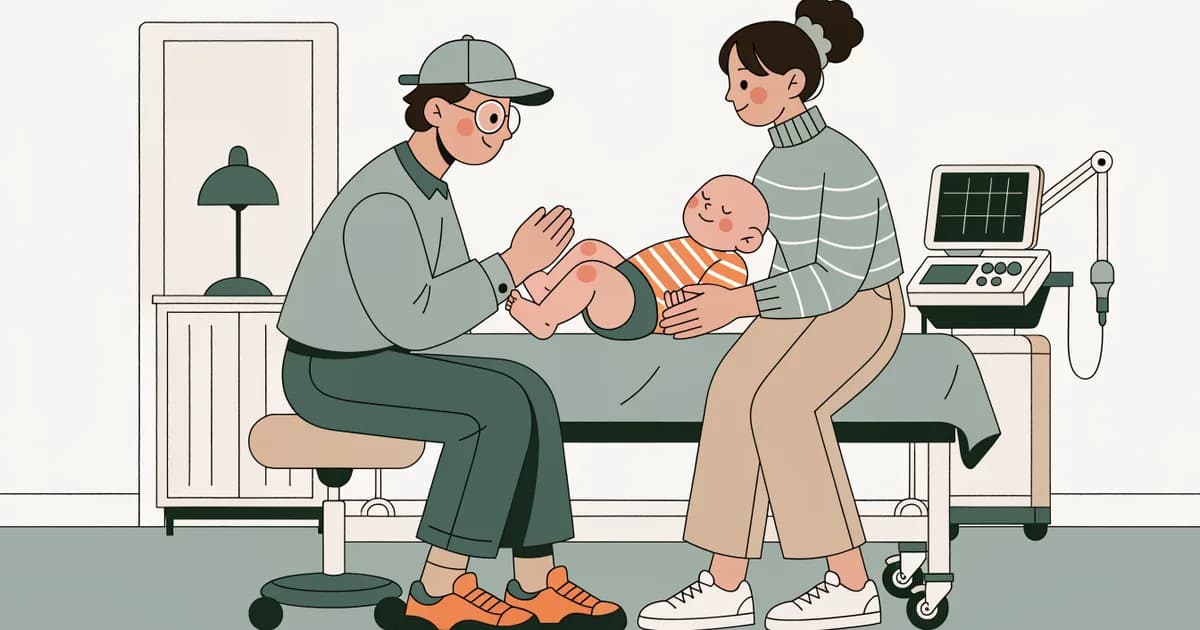
  • Your infant requires a screening hip ultrasound.
  • You are planning orthopaedic surgery or returning after a procedure and need a further treatment plan.
  • You need a second orthopaedic opinion on an existing diagnosis.

What to expect

An orthopaedic visit is primarily a conversation and examination. The surgeon takes time for a thorough history, a detailed clinical examination, and — if needed — orders or performs an ultrasound scan. At the end, they explain the diagnosis, discuss treatment options, and set out a plan (rehabilitation, further diagnostics, follow-up). The entire process is clear and unhurried.

Book appointment

Content verified by: dr n. med Michał Kłosiński · 11 January 2026

What to expect during the visit

1

History

The orthopaedic surgeon asks about the circumstances of the problem, the nature of the pain, previous treatment, past injuries, and surgeries. For children — questions about motor development, posture, and activity. Bring any existing examination results (X-ray, MRI, ultrasound).

2

Clinical examination

Assessment of posture, range of motion, joint stability, and gait (for children — assessment of developmental milestones). The surgeon uses provocative tests, palpation, and functional assessment.

3

Imaging (if needed)

If required, the surgeon orders or performs an ultrasound directly in the consulting room (infant hip ultrasound, musculoskeletal ultrasound). If X-ray or MRI is needed, a referral is issued.

4

Diagnosis and treatment plan

The surgeon discusses the results, explains the diagnosis, and presents options: rehabilitation (referral to a physiotherapist within our clinic), conservative treatment, or qualification for further diagnostics or surgery.

Pricing

ServicePrice
Ostrzyknięcie kwasem hialuronowym850 zł
Bogatopłytkowe czynniki wzrostu (PRP)900 zł
Ostrzyknięcie stawu lekiem (Diprophos, Lignocainum)130 zł
Wizyta + ostrzyknięcie stawu (Diprophos, Lignocainum)400 zł
Konsultacja ortopedyczna + USG/USG (podwójne)390 zł / 420 zł
Konsultacja ortopedyczna350 zł

Full pricing available on our pricing page.

Who is this service for

Infants (hip screening)

Neonatal hip ultrasound is a standard screening examination. Early detection of dysplasia enables prompt treatment.

Children with postural problems

Scoliosis, flat feet, knock knees, toe-walking, gait asymmetry. Early diagnosis means easier treatment.

Adults with joint and spinal pain

Knee, shoulder, hip, and spinal pain. Identifying the cause and creating a treatment plan (rehabilitation, pharmacotherapy, surgical qualification).

People after injuries

Sprains, dislocations, suspected fractures, sports injuries. Assessing the extent of damage and deciding on further management.

Post-surgical patients

Follow-up after arthroscopy, ligament reconstruction, joint replacement. Assessing healing and planning rehabilitation.

Athletes

Assessment of overuse injuries, sports injuries, clearance for return to activity.

Indications

  • Spinal pain (cervical, thoracic, lumbar)
  • Knee joint pain (instability, swelling, restricted movement)
  • Shoulder pain (restricted arm elevation, night pain)
  • Hip pain (restricted rotation, limping)
  • Foot and ankle pain
  • Suspected fracture or dislocation after injury
  • Postural defects in children (scoliosis, hyperlordosis)
  • Flat feet and foot valgus
  • Knock knees or bow legs in children
  • Toe-walking in a child
  • Neonatal hip ultrasound (developmental dysplasia screening)
  • Post-surgical follow-up (arthroscopy, joint replacement, ACL reconstruction)
  • Joint swelling, redness, or warmth
  • Restricted range of motion in any joint
  • Limb numbness accompanying spinal pain

Contraindications and limitations

  • An orthopaedic consultation has no typical contraindications — it is a diagnostic visit

When to seek urgent medical help

  • If pain occurred after a serious injury (road traffic accident, fall from height) with suspected spinal damage — call an ambulance, do not transport the patient yourself
  • Sudden joint swelling and severe pain with fever — may indicate septic arthritis, requires urgent medical attention
  • Sudden pain, pallor, and cold limb after injury — suspected vascular injury, requires emergency intervention

Therapy goals

  • Establish a precise diagnosis
  • Rule out conditions requiring urgent intervention
  • Early detection of hip dysplasia in infants
  • Develop a treatment plan (rehabilitation, pharmacotherapy, surgery)
  • Monitor treatment progress (follow-up visits)
  • Coordinate care with the physiotherapist and osteopath within the clinic

Realistic expectations

  • An orthopaedic consultation provides a diagnosis and a plan — it is the starting point for treatment, not a one-off solution.
  • For acute injuries (sprains, contusions) — assessment and initiation of treatment usually happen in a single visit.
  • For chronic conditions (knee or spinal pain) — diagnosis may require imaging (X-ray, MRI) and a follow-up visit with results.
  • Infant hip ultrasound — result and interpretation are available immediately. A normal result means one visit is sufficient.
  • Post-surgical rehabilitation is a multi-week process — the surgeon sets the plan and the physiotherapist carries it out.
  • If the problem requires further investigation (MRI, neurosurgical consultation), the surgeon issues a referral and explains the next steps.

When to consider a different consultation

  • If the problem involves chronic spinal pain with no visible changes on imaging — consider physiotherapy or osteopathy as a first step.
  • If symptoms include numbness, muscle weakness, or bladder problems — consider an urgent neurological consultation.
  • If your child has postural asymmetry combined with feeding difficulties — consider an osteopathic consultation.
  • For rheumatological conditions (inflammation of multiple joints, morning stiffness) — start with a rheumatologist.

Physiotherapy

Rehabilitation after orthopaedic diagnosis, injury, or surgery

Osteopathy

Holistic complement to orthopaedic treatment

Ultrasound (USG)

Imaging diagnostics available directly within the clinic

Want to book an appointment?

Book appointmentCall us

Frequently asked questions

Do I need a referral for an orthopaedic consultation?
No. A referral is not required for a private orthopaedic appointment at NidoMed. You can book directly.
How long is the consultation?
An orthopaedic consultation lasts approximately 30-40 minutes. If the surgeon orders an additional in-clinic ultrasound, the visit may be slightly longer.
What should I bring to the appointment?
Imaging results (X-ray, MRI, ultrasound) — both CDs and written reports. Hospital discharge summaries, referrals. For a child, bring the health booklet. A list of medications if any are taken regularly.
Can the orthopaedic surgeon perform an ultrasound during the visit?
Yes. At NidoMed, ultrasound can be performed in the consulting room — both infant hip ultrasound and musculoskeletal ultrasound. Results are available immediately.
Can I start rehabilitation straight after the consultation?
Yes. NidoMed is a clinic where the orthopaedic surgeon works alongside physiotherapists and osteopaths. After your consultation, you can book physiotherapy or osteopathy without searching for specialists elsewhere.
When should I have my baby's hips checked?
Hip ultrasound screening is recommended at 6-8 weeks of age. If risk factors are present (breech delivery, family history of dysplasia, low amniotic fluid), it may be recommended earlier. If in doubt, book an appointment.

References

  1. Bent MA, Stork NC, Nemeth BA. "The diagnosis and management of common childhood orthopedic disorders: An update." Curr Probl Pediatr Adolesc Health Care. 2020;50(10):100884. PMID: 33069588 [link]
  2. Lien J, et al. "Pediatric orthopedic injuries: evidence-based management in the emergency department." Pediatr Emerg Med Pract. 2017;14(9):1-28. PMID: 28825959 [link]
  3. Gandhi JS, et al. "Evidence-based Medicine in Pediatric Orthopaedics: Summary of Levels of Evidence, Clinical Practice Guidelines, Appropriate Use Criteria." J Pediatr Orthop. 2018;38(Suppl 1):S4-S6. PMID: 29727412 [link]

Have questions? We’re happy to help!

Required fields are marked *

Include if you prefer to be contacted by phone