What therapeutic massage is
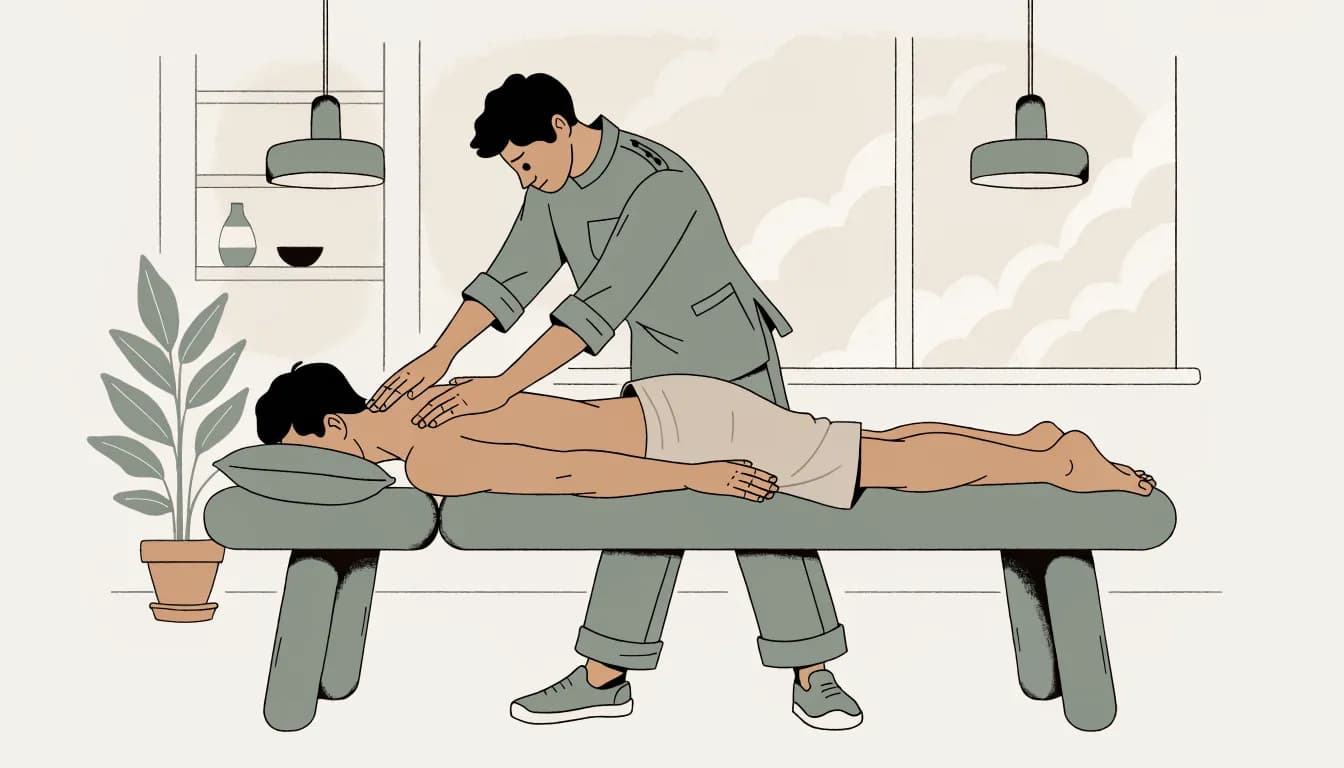
Therapeutic massage is manual work on the skin, fascia and muscles. It reduces pain, releases tension and improves mobility. Unlike a relaxation massage in a spa, we begin with a medical history and an examination. Only then do we select a technique tailored to your problem.
A 60-minute session does not look the same for everyone. One person will receive deep work on a tense neck, another gentler fascia release for a headache, someone after training will get a sports massage. What is right for you is decided after the examination.
At Nido, therapeutic massage is performed by a physiotherapist. It helps to reduce muscle pain and soft-tissue tension. For pain that has lasted for weeks, it works most effectively in combination with exercise and a treatment plan.
Massage, physiotherapy, osteopathy — which to choose?
A short guide if you are hesitating between services at Nido:
- Therapeutic massage — when you need to release a specific muscle tension, work on a scar, or recover after physical effort.
- Physiotherapy — when a full plan is needed (massage with exercises, education and ergonomics) for chronic pain or post-injury rehabilitation.
- Osteopathy — when you need diagnostics that include joint manipulation techniques and fascial work, especially when the cause of pain is hard to localise.
Hesitating between massage and physiotherapy? Physiotherapy is usually the safer choice. Massage is part of it, and you also get an examination, an exercise plan and a conversation about habits.
Don't know which approach is right for you? Write or call us. After taking a brief history, we will direct you to the right specialist.
Techniques we use
- Classical (Swedish) massage. Smooth, rhythmic strokes with moderate pressure. General relaxation, support for circulation.
- Deep tissue massage. Slower pace, work on deeper muscle layers in chronic tension.
- Myofascial release. Sustained pressure and slow stretching of the fascia (the tissue surrounding the muscles). Helpful in tension-type headaches and fibromyalgia.
- Trigger point therapy. Precise pressure on painful points in the muscles that refer pain elsewhere.
- Manual work on tight soft tissues. Combined techniques targeting fascia and muscles, complementing therapy and exercise.
- Sports and recovery massage. Supports recovery after physical loads. Reduces post-exercise soreness.
- Post-operative scar work. Work on scar elasticity after full healing, in agreement with your treating physician.
When it is worth coming in
- chronic low-back or neck pain that does not subside with standard treatment,
- tension-type headaches or headaches arising from a tense neck,
- fibromyalgia (widespread body pain, anxiety, low mood),
- knee osteoarthritis (pain and stiffness),
- bruxism and pain in the temporomandibular joint,
- post-training recovery, delayed muscle soreness and tenderness,
- chronic stress, anxiety, sleep problems (as support for other therapy),
- tension from desk work and long hours in front of a screen,
- post-operative scar work after full healing.
What to expect
The first improvement is often felt after the very first visit. With chronic problems, results usually appear after a series of 3–5 sessions combined with exercises and self-care at home. With very complex or long-standing complaints, the series may be longer and spread over several weeks.
Within 24–72 hours after the procedure you may feel tenderness, mild fatigue or a short-term increase in pain in the areas we worked on. This is a normal reaction of the body, not a complication. It is worth staying hydrated, moving at a moderate pace (a walk) and skipping intense training or a sauna on the same day.
Safety
Therapeutic massage is a safe procedure when performed by a trained person after a thorough medical interview. We follow several rules that we never bypass:
- We ask about blood-thinning medication, prior thromboses, osteoporosis, oncological treatment and the course of pregnancy. This changes the choice of technique and pressure.
- In pregnancy we work only in the side-lying position, without abdominal massage and without deep work on the leg muscles.
- We do not massage a fresh haematoma, an open wound or an area with active skin inflammation.
- If alarm symptoms appear in the medical history (sudden severe pain, numbness and weakness, chest pain, one-sided painful calf swelling, fever with severe back pain), we refuse the procedure and refer the patient to a doctor or to the emergency department. This is non-negotiable.