
Dental physiotherapy is an increasingly popular method supporting the treatment of conditions related to the stomatognathic system, which comprises the temporomandibular joints, masticatory muscles, and teeth. It can effectively address a variety of complaints, such as jaw pain, muscle stiffness, and teeth grinding.
Do not delay seeking medical attention if you experience:
In these cases, an urgent dental or surgical consultation is recommended.
Dental physiotherapy focuses on the diagnosis and treatment of functional disorders within the temporomandibular joints, facial muscles, neck, and upper back. This therapy takes a holistic approach to the patient, aiming not only to alleviate symptoms but also to improve the overall functioning of the masticatory apparatus.
A dental physiotherapist works both manually (intraorally and extraorally) and using specialised techniques. The main treatment methods include:
Dental physiotherapy is often combined with other treatment methods, such as orthodontic, prosthetic, or surgical dentistry, allowing for comprehensive patient care.
Dental physiotherapy is indicated in many cases, particularly when the patient experiences complaints related to the functioning of the temporomandibular joints. Here are some of the most common situations in which this form of therapy is worth considering:
This is one of the most common complaints that bring patients to physiotherapists. Symptoms such as stiffness, pain when opening the mouth, or clicking in the joints may indicate joint dysfunction.
Excessive clenching and grinding of the teeth, known as bruxism, leads to overloading of the facial muscles and damage to the teeth. Physiotherapy can help reduce muscle tension and alleviate symptoms.
Read more: Bruxism in children — causes, consequences, and treatment methods
Some headaches, particularly those related to muscle tension, may originate from dysfunction of the masticatory system. Manual therapy and exercises can relieve tension and restore muscular balance.
Difficulty in wide mouth opening may result from restricted mobility of the temporomandibular joints. Physiotherapy helps restore a normal range of motion, which improves the patient's quality of life.
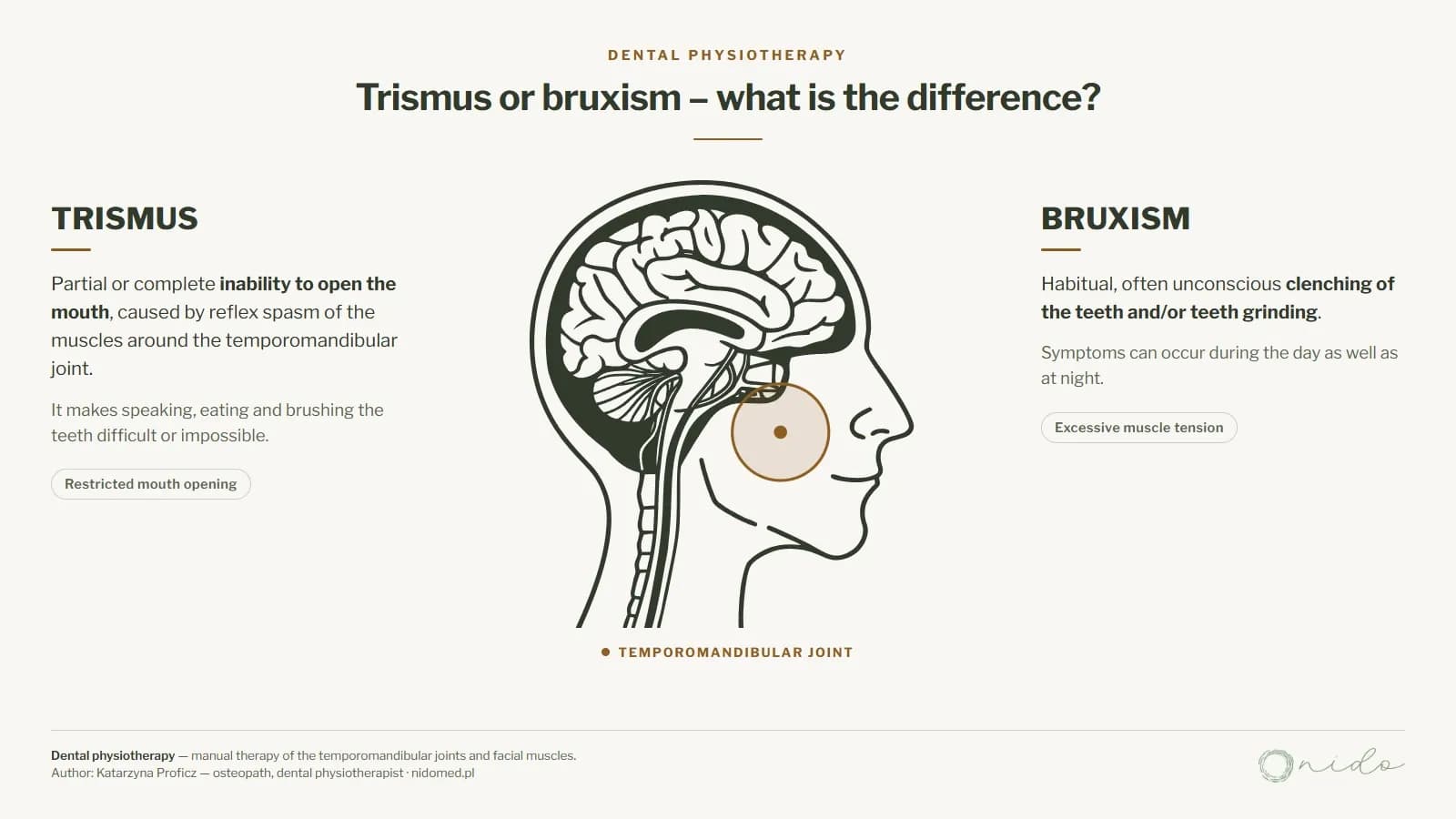
Trismus is a partial or complete inability to open the mouth, caused by reflex spasm of the muscles around the temporomandibular joint. It makes speaking, eating and brushing the teeth difficult or impossible.
Bruxism is a different problem — habitual, often unconscious clenching of the teeth and/or teeth grinding, with symptoms that can occur during the day as well as at night.
Following surgeries involving the removal of wisdom teeth, reconstruction of the temporomandibular joint, or other surgical procedures, physiotherapy helps restore proper muscle and joint function.
Dental physiotherapy focuses on normalising myofascial tension and improving blood flow, drainage, and joint mobility. With this support, pain in the face, joints, sinuses, head, and many other complaints can be significantly reduced, improving the patient's quality of life.
Patients who have undergone tooth extraction, implant placement, or other dental procedures may need rehabilitation support to restore full functionality of the masticatory apparatus.
Young children with problems breathing through the nose, such as nasal septum defects or fractures, can benefit from physiotherapy to improve respiratory function.
Patients preparing for the fitting of orthodontic braces, as well as those undergoing orthodontic treatment, can benefit from physiotherapy to alleviate discomfort and improve treatment effectiveness.
Children with muscle tone disorders in the oral cavity, face, or throat, as well as those who have undergone a frenectomy, can receive help in normalising speech and eating functions.
Infants who have difficulty latching on to the breast, which may lead to regurgitation or other problems, can benefit from physiotherapy. Through the collaboration of a feeding therapist, a certified lactation consultant, and a physiotherapist, feeding-related problems can be addressed holistically.
Dental physiotherapy is an effective and increasingly popular method supporting the treatment of problems with the stomatognathic system. Through manual therapy, exercises, and appropriate relaxation techniques, pain can be alleviated, temporomandibular joint function can be improved, and muscle tension can be reduced.
This article was prepared in collaboration with Katarzyna Proficz — osteopath, dental physiotherapist.