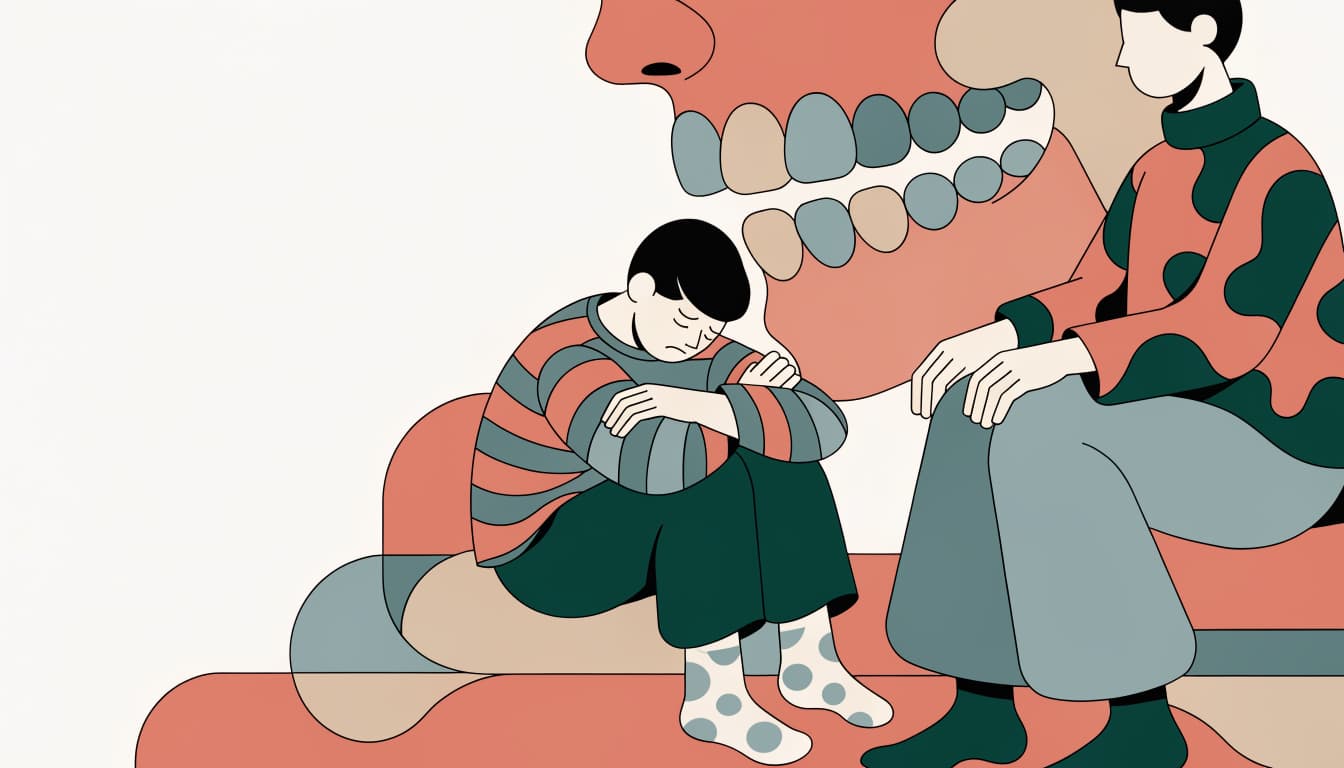
Bruxism — the involuntary clenching or grinding of teeth — is a common problem affecting both adults and children. In this article we discuss what bruxism is, why it occurs in children, and what effective treatment methods are available, including the support of osteopaths, dental physiotherapists, and the Buteyko breathing method.
Do not delay seeking medical attention if your child experiences:
In these cases, a dental, orthodontic, or neurological consultation is recommended.
Bruxism is habitual, unconscious clenching and grinding of the teeth, which most commonly occurs during sleep but can also appear during the day. It is a disorder that can lead to many health problems, including jaw pain, tooth damage, headaches, and sleep disturbances.
Bruxism in children is a relatively common phenomenon that can have various causes. Understanding why children grind their teeth is crucial for finding appropriate treatment methods and support. Here are some of the main reasons why bruxism occurs in the youngest patients.
Children, like adults, can experience stress and anxiety, which manifest in various forms, including through bruxism. These may be stressors related to:
In children, particularly the youngest, the neuromuscular system and its coordination are still developing. Correct chewing control requires full maturity of the neuromuscular system.
In young children, bruxism may be associated with teething and changes in dentition. Teething is a natural process during which children may experience pain and discomfort in the gums. Bruxism may be a response to:
Bruxism in children is often associated with sleep problems, for example:
Bruxism may also result from problems related to the oral cavity and dentition. These may include:
Bruxism may also have a genetic basis. If there is a family history of bruxism, there is a greater likelihood that the child will also suffer from this condition. Genetic predispositions can affect:
Recognising bruxism in children can be difficult, as it often occurs during sleep. It is important for parents to watch for the following symptoms:
Treatment of bruxism in children requires a multifaceted approach. In addition to a consultation with a dentist, who will assess the condition of the teeth and gums, it is advisable to seek the support of an osteopath or dental physiotherapist in parallel.
Manual techniques and exercises can, among other things:
In the case of children with bruxism, it is also worth considering breathing training. The Buteyko breathing method can be helpful, enabling the child to begin breathing consciously — that is, to understand the breathing process. Correct nasal breathing improves breathing quality, reduces tension, improves sleep quality, and also supports the proper development of the face and airways.
In addition to dental, physiotherapeutic, and breathing exercise support, parents can help their child cope with stress. How to do this?
Bruxism in children can have various causes, from stress and anxiety, through teething, to dental problems and genetic factors. Early recognition of symptoms and taking appropriate steps towards treatment is crucial. The support of osteopaths, dental physiotherapists, and the application of the Buteyko breathing method can significantly help reduce the symptoms of bruxism and improve the child's quality of life. If you suspect bruxism in your child, consult the appropriate specialist to obtain professional help and support.
This article was reviewed by Katarzyna Proficz — osteopath, dental physiotherapist.
Symptoms
Body regions